
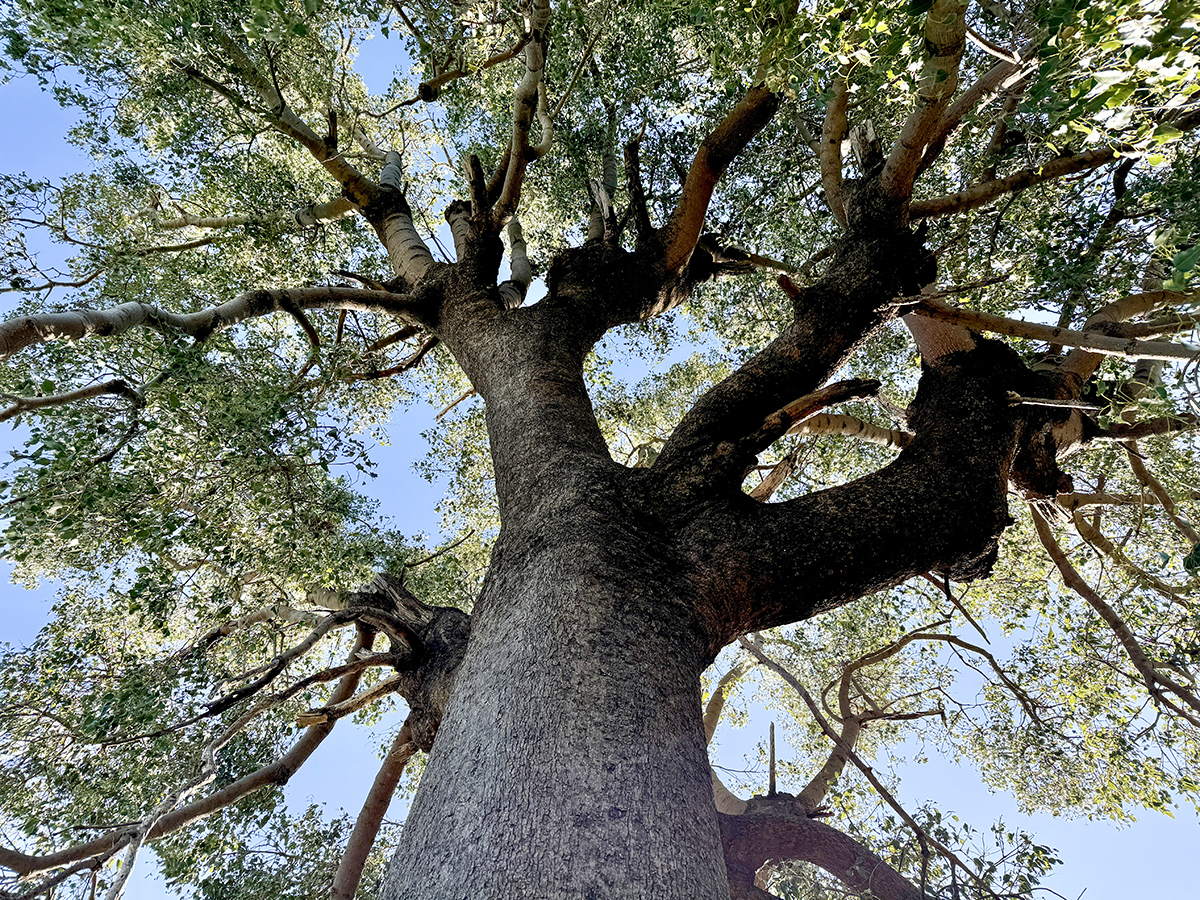
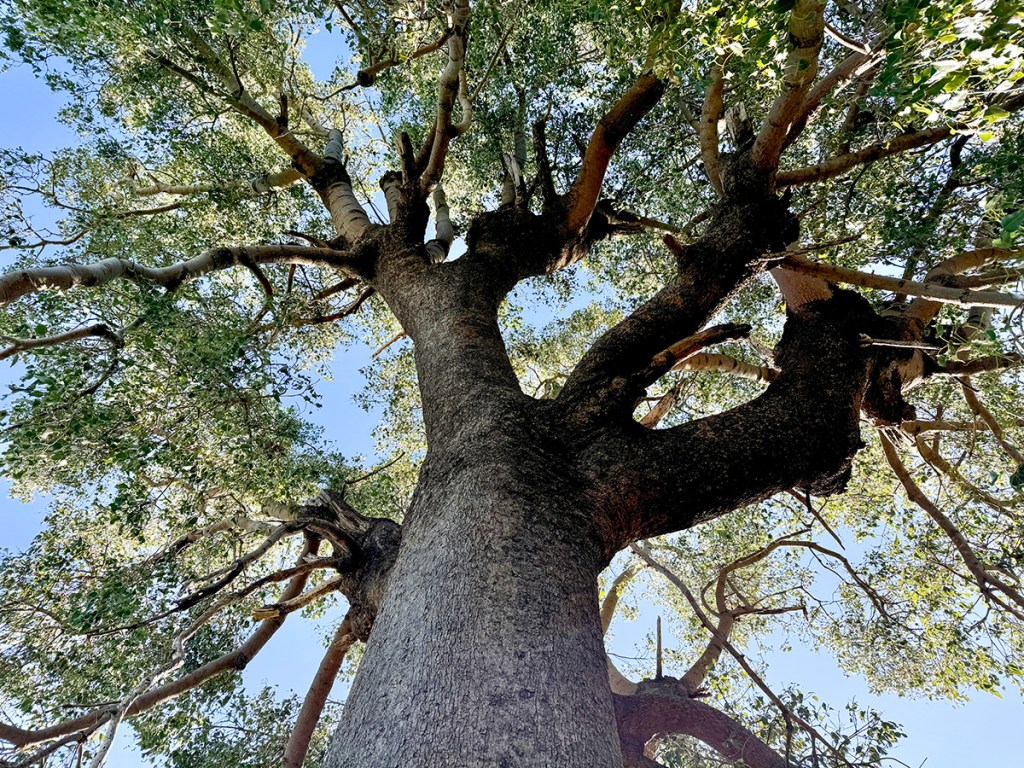
In August 2024, as I was preparing for my spring SOIL+AiR creative rural research residency sessions on farm, I wrote about listening to one of the paddock trees for a Meta* post. Going into the New Year, I thought it worth revisiting.
I had the privilege of sitting close to a Kurrajong tree in a paddock on the Western Plains of New South Wales on Wednesday, headphones on, listening intently to the tree’s roots, leaves, and immediate surrounds—the landscape it sits within.
I’m fortunate, to be able to do this often as I’m surrounded by old giants that I’ve come to know intimately over the years. This tree is a farm tree, part of a farming system. If you listen carefully, you’ll hear sheep (ewes and lambs) bleating in the background. The seasons, the soils, the decisions made by the land manager, and the wider environment all impact the sonic signature of this tree. Changes in its environment will be reflected in changes in the tree. This is the voice more-than-human species have. We just need to listen.
The leaves were sparkling on that warm, mid-afternoon on the cusp of spring, but for most of the time I sat there, my eyes were shut. Using specialist microphones, I was listening attentively to life in the soil beneath the tree, the clattering of its leaves and the wider atmosphere, including a scolding Apostlebird perched above me, and ravens in the distance. The wind was gusty.
A compass and map notes
My body is a compass and barometer when I’m actively listening and taking the sonic pulse of things. This idea helps me navigate when road signs are missing, the weather is uncertain, and the ground uneven. We seem to be crossing a lot of that territory at the moment, and it could get wilder yet.
Along with listening, I observe. This summer, I’ve spent hours watching and photographing the birds in my garden—mostly from my kitchen window (fly screen removed for better viewing). I have a birdbath set up about five metres from the window, nestled beneath a shrubby Callistemon and a collection of drums, bathtubs, and sinks that grow my seasonal greens and herbs.
Over 17 years, I’ve spent a lot of time watching the woodland birds here. We have many who call the garden home, and many who regularly return depending on the season. I’ve counted more than 50 species here so far this summer. It hasn’t taken much to create an environment to ensure there are birds here year-round. I have propagated many of my garden plants from cuttings and seeds, by dividing clumps, and bulk planting anything that survives the years-long droughts of the past two decades. We’re not on a town water supply, so water is used sparingly from our rainwater tanks and dam. What I can’t propagate, I choose carefully from local native plant nurseries—choosing dense, shrubby flowering species to create an understorey beneath our tall, established native trees of box, ironbark, silky oak, and lemon-scented gum. Lawn is kept to a minimum.
It’s then a matter of providing watering points for different species of birds. I have the veggie patch birdbath for the little birds who want the cover of a shrub, a more open, lower but raised birdbath for the slightly bigger birds and those who can’t wait to take their turn in the veggie garden. Then, there’s ground level baths in wilder parts of the garden for the bigger woodland birds who don’t come close to the house, as well as the lizards and echidnas. The bees and wasps take their pick depending on what suits.

Yelllow-cheeked Honeyeater and Double-barred Finches 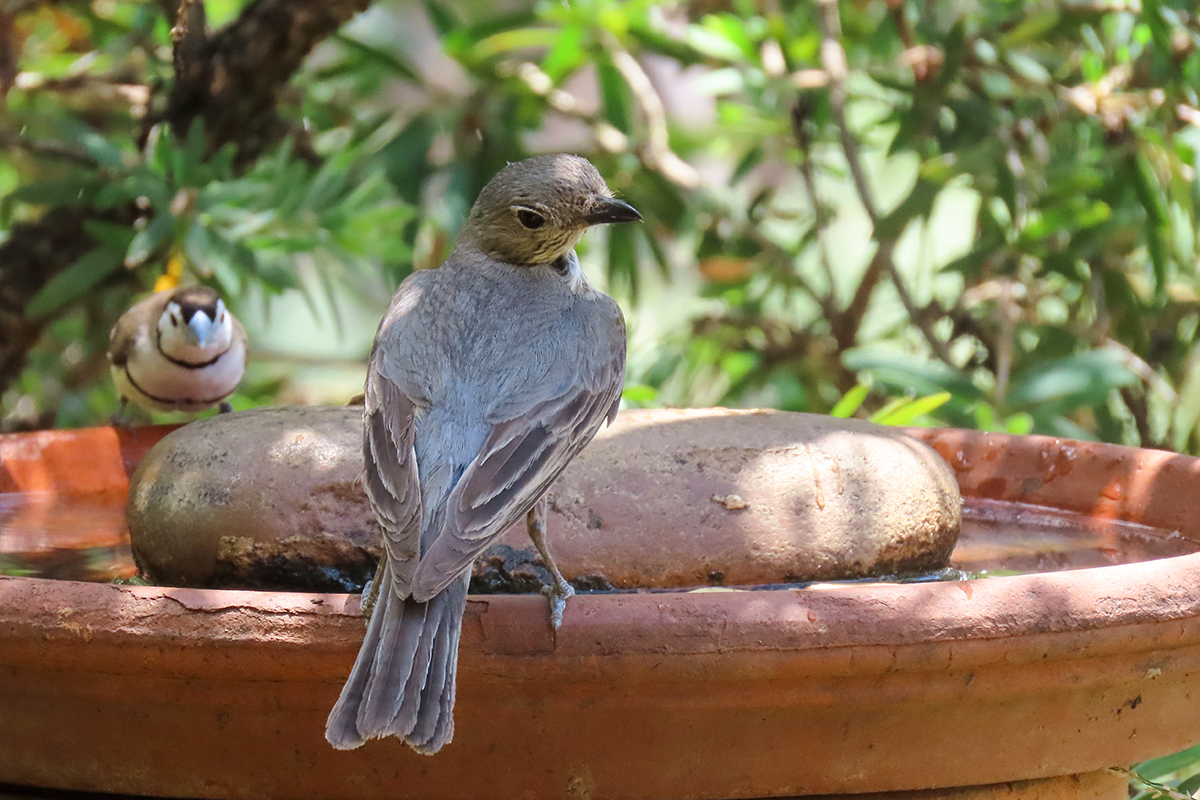
Female Rufous Whistler and Double-barred Finch 
Male Rufous Whistler 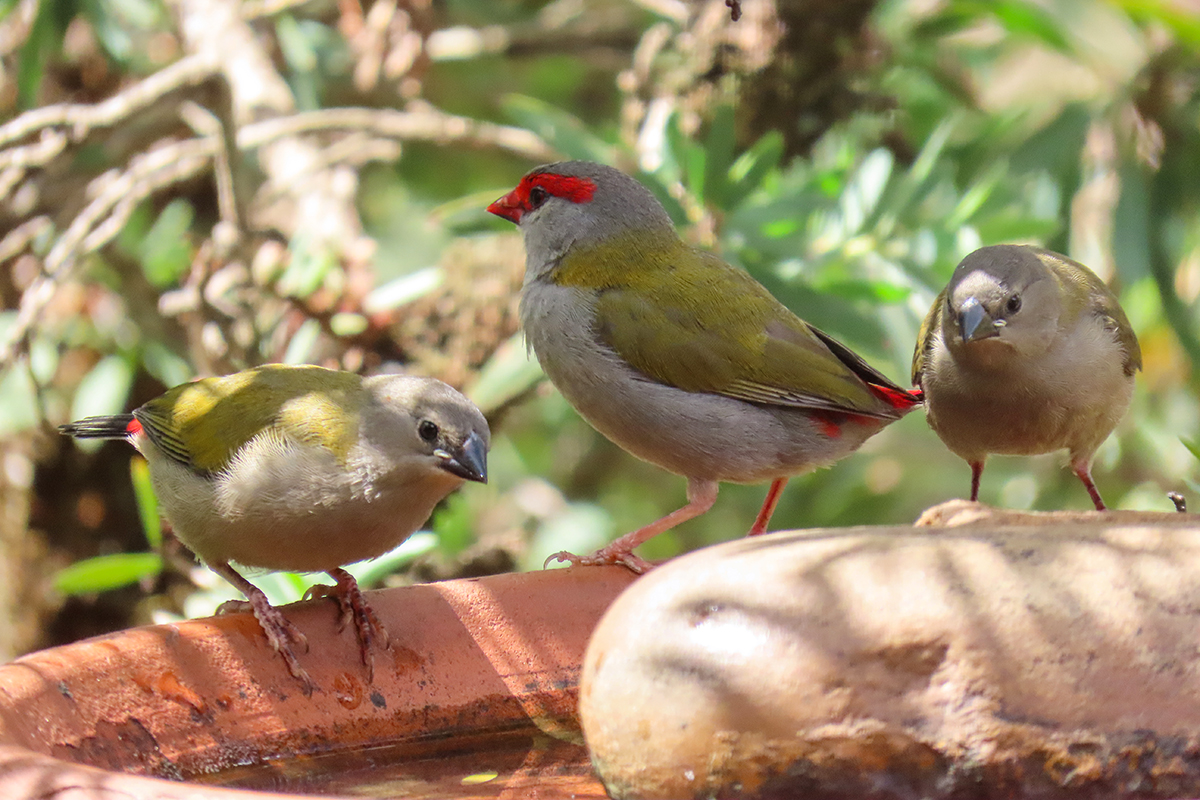
Red-browed Finches 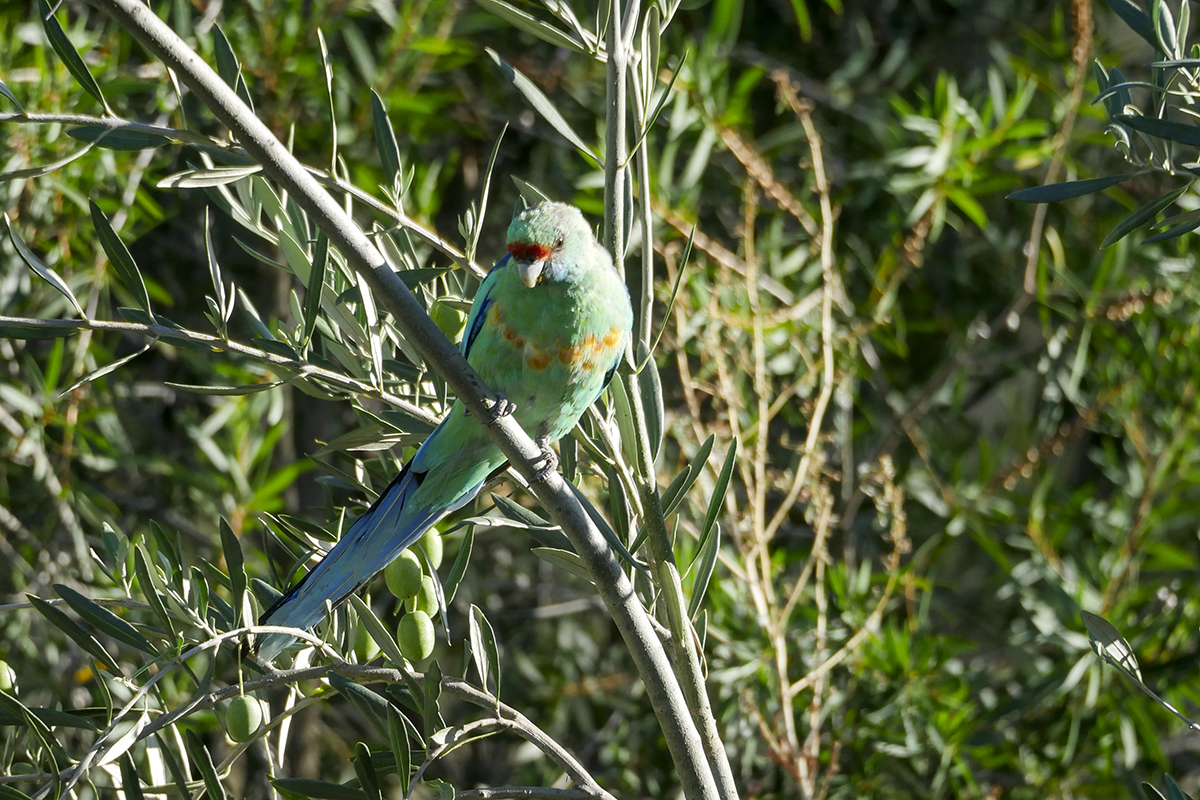
Female Australian Ringneck parrot 
Brown Quail 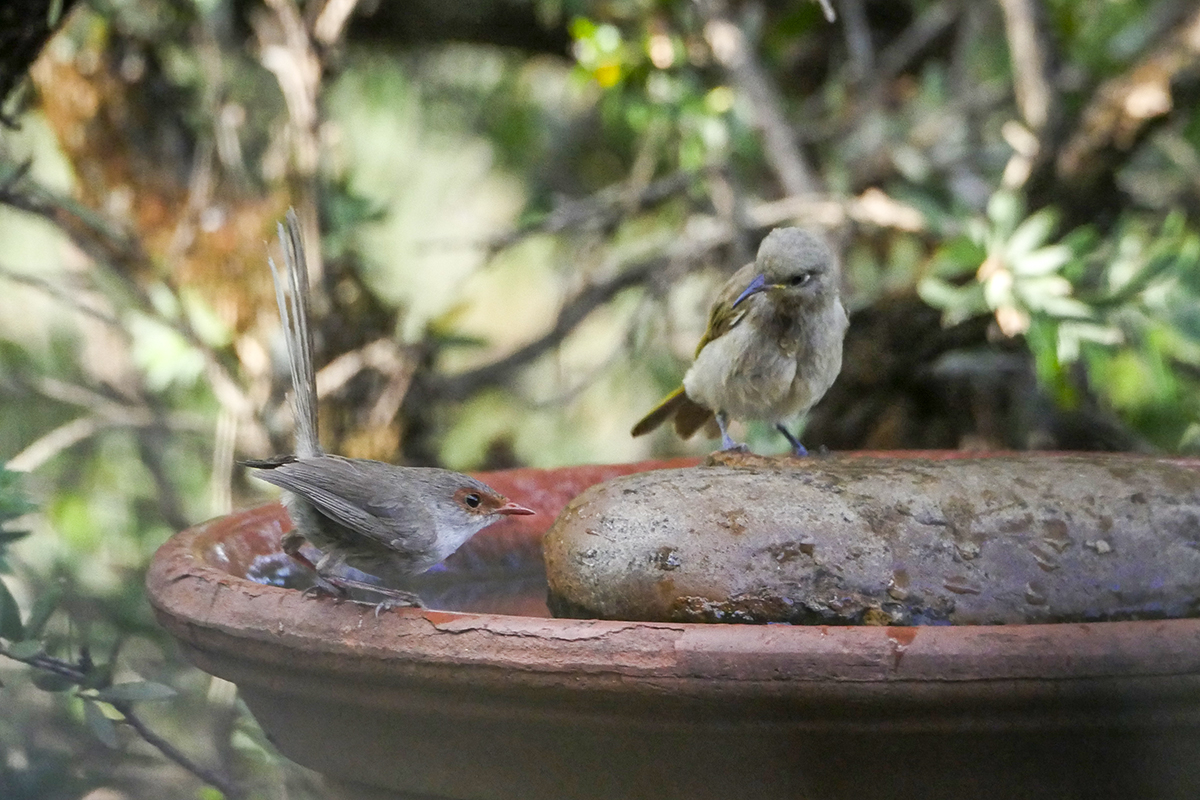
Female Superb Fairywren and Brown Honeyeater 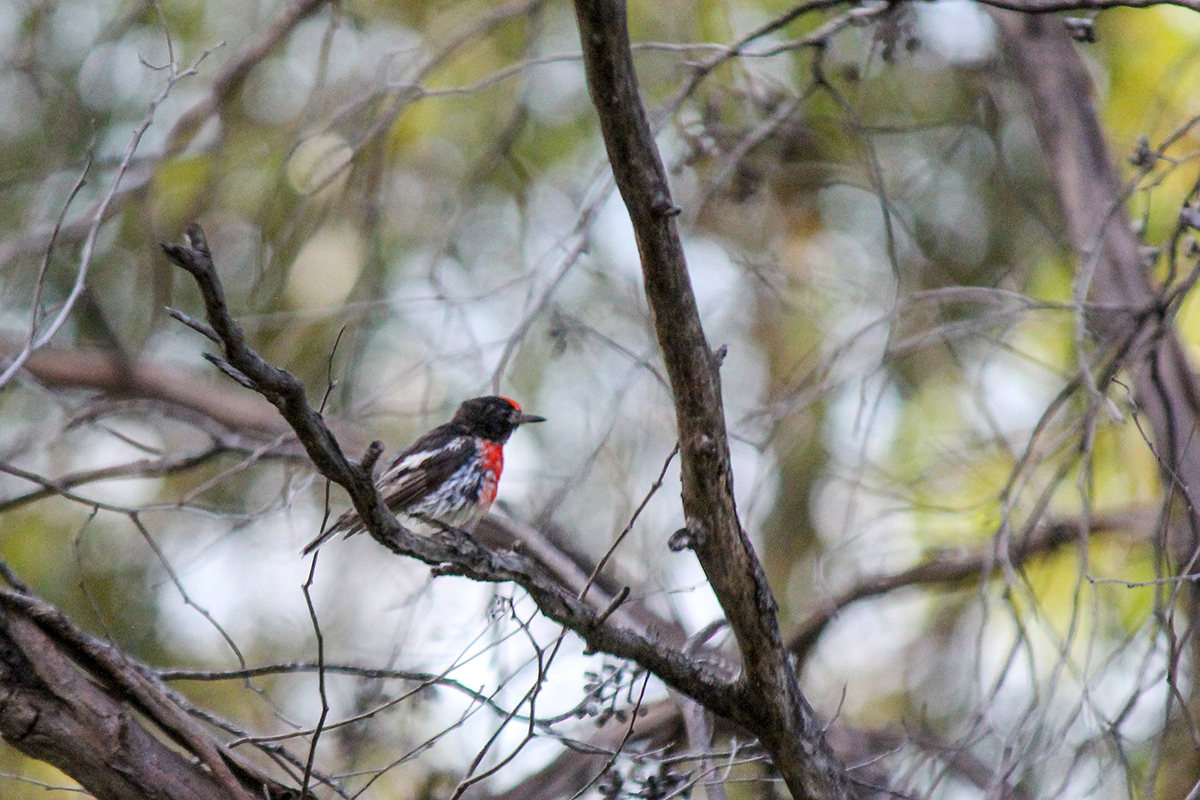
Red-capped Robin 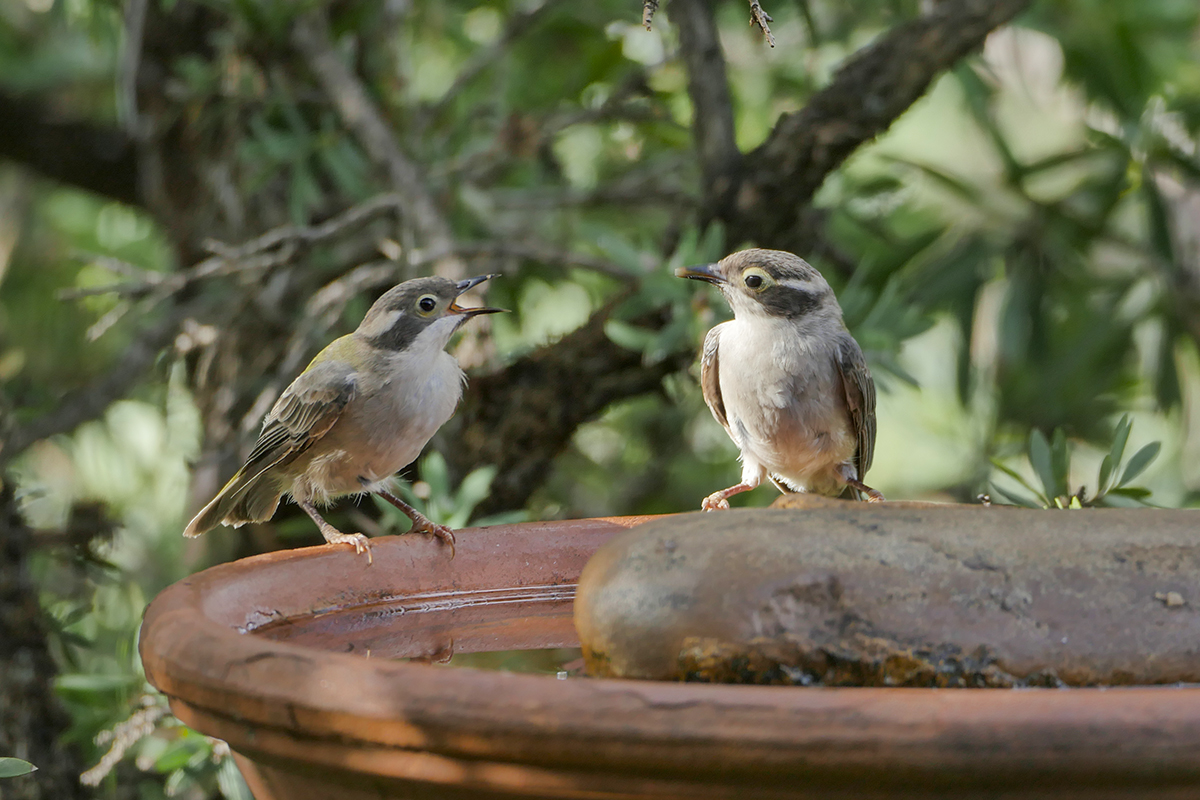
A pair of Brown-headed Honeyeaters 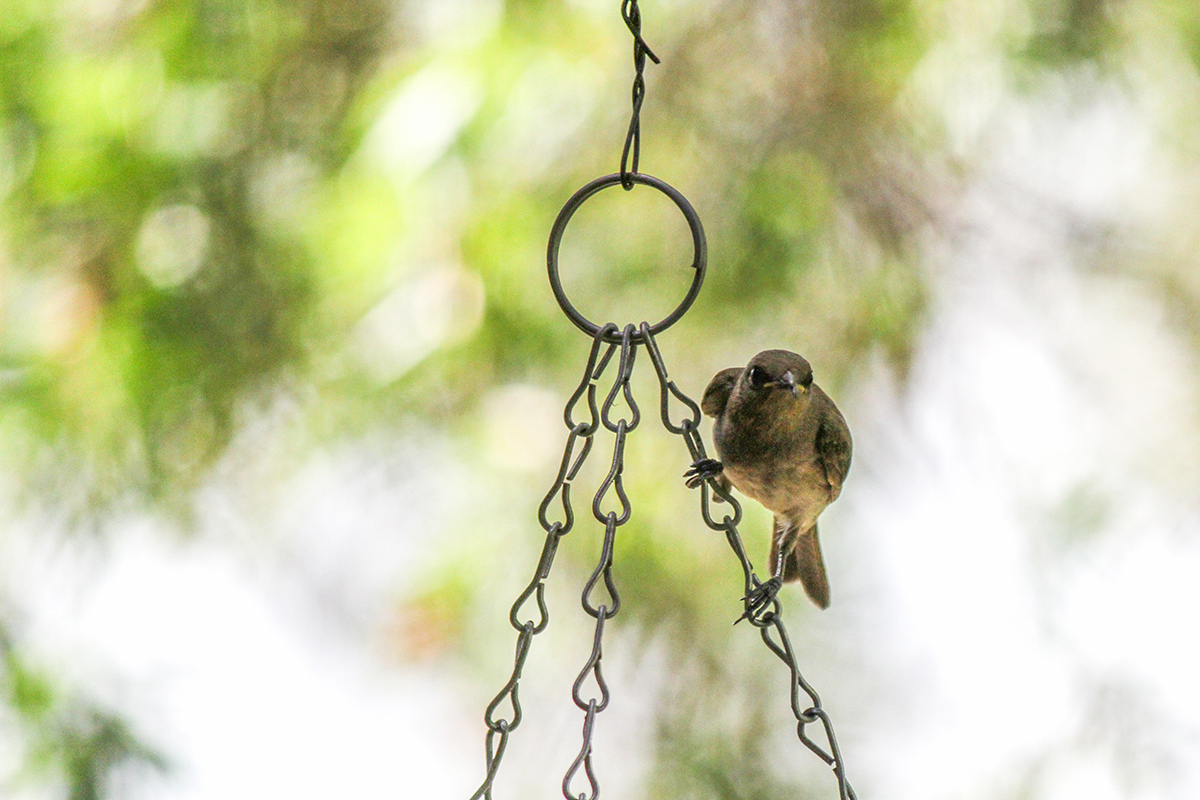
Brown Honeyeater 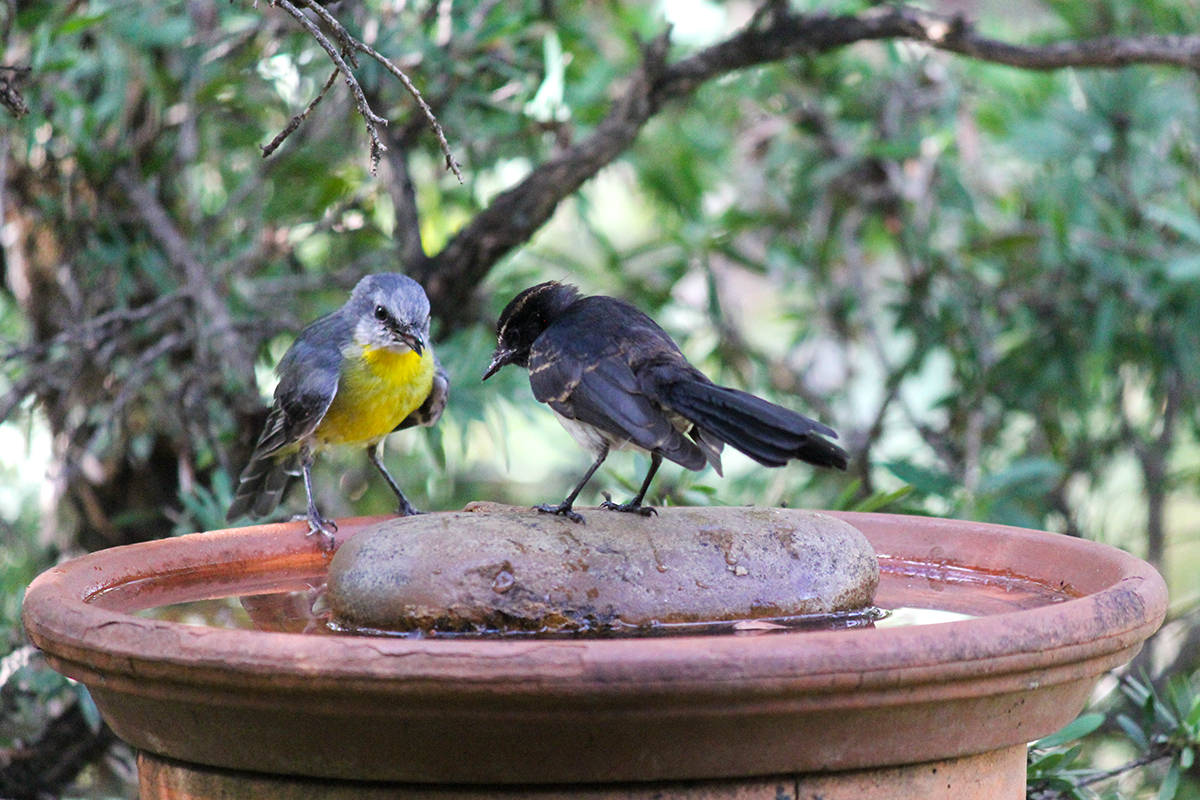
Eastern Yellow Robin and Willie Wagtail 
Red-browed and Double-barred Finches 
Male Superb Fairywren 
White-plumed Honeyeater, Eastern Yellow Robin and Willie Wagtail 
Spiney-cheeked Honeyeater and a pair of Willie Wagtails
A slideshow of some of the woodland birds who live in or visit my garden.
Reading the signs
Observations of the heriarchical behaviours of different woodland bird species as they come into water, are like map notes to my compass. These are songbirds, yet their communication with each other through aerial manoeuvres, staked position, the fluffing of feathers and spreading of wings, and eye contact is endlessly fascinating and something you can only appreciate over time. Layers of knowledge build over years of observing and listening to a place.
This summer, we’ve had a cicada ‘super year’ that has impacted the behaviour of our woodland birds. The cicada chorus starts about mid-morning, once the temperatures are in the low 20s°C, and is constant well into the night, coming in waves from the bottom of the north paddock, into the shallow waterway to our east, and finally into the canopies close to the house. It’s unusual to hear woodland birds through the day once they start. Even the dawn chorus at this time of year seems subdued.
There is something in these observations that could be referred to as reading the landscape. My bush-yarning, storytelling paternal grandfather taught me to watch for patterns and signals on the flat plains of the farm I grew up on—tracking birds, lizards and snakes, watching the formations of flying birds, and the activity of ants and emus for signs of rain or drought. In First Nations cultures, it’s an even deeper understanding of Country beyond just the physicality of the landscape. It encompasses the physical, but is deeply connected to cultural, social, and spiritual elements across space and time. My grandfather of Irish heritage was strongly influenced by the Aboriginal stockmen in his early life, greatly respecting their knowledge and skill.
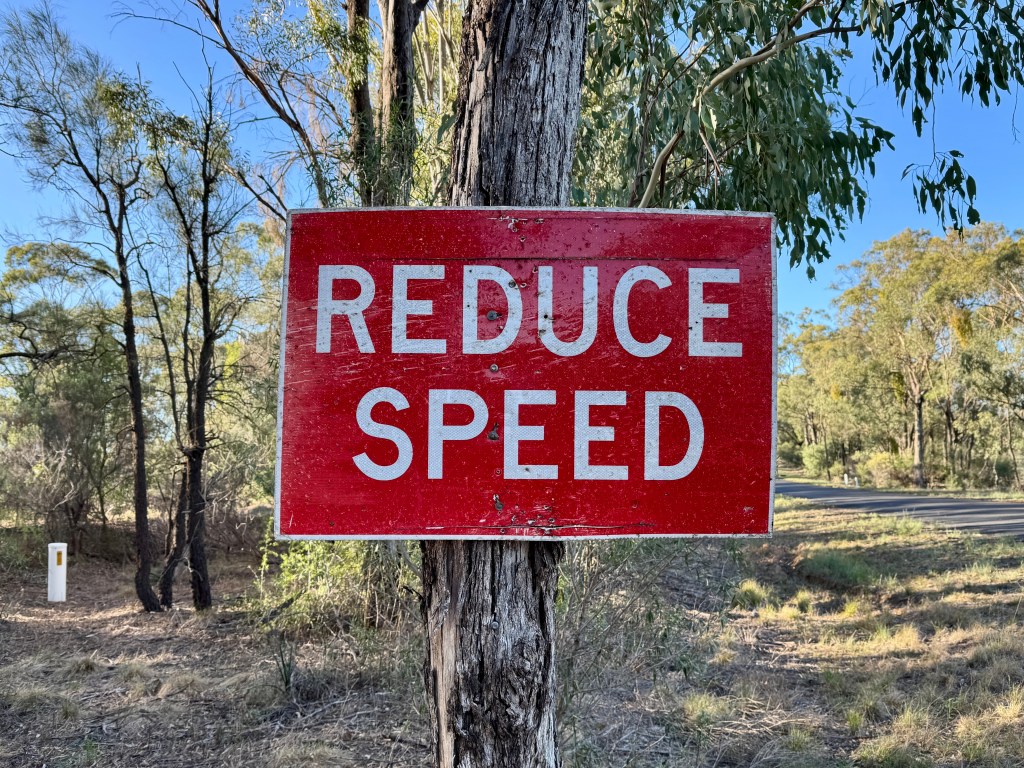
Reduce speed
For me, giving myself permission to slow down allows the boundaries to dissolve between me and the environment I’m wanting to tune into. It’s focussed and intentional. When I do it well and my mind stills, all else melts away.
In the field recording course I facilitate, I often talk about the importance of deep, attentive listening before touching the audio recording technology. Slowing down racing thoughts and our heart rate attunes us more closely with the environment we’re part of. It can be seen as seeking permission to be there; to listen, to observe, and then maybe capture it for our benefit. A more physiological way of thinking about this is about getting oxygen to your brain to make better decisions, making less noise by being more self aware, and allowing the species or environment you’re wanting to document to settle and get used to your presence. Remember, we’re also being listened to.
Taking time over summer to tune in more deeply to my presence and function within the place I live, as well as giving myself time to sleep, read, and think about the year ahead. I’ve made a pledge to proceed more slowly. Like many, I find it hard to say ‘no’ when I know it’s something I have the knowledge or skills to do. It means I then work around the clock to fit everything in, often for little benefit to me or my personal vision, leaving me exhausted.
What I have and what I know is a privilege. I need to breathe more deeply. I need to savour more moments not things. I need to continue being an ally, giving voice to the voiceless through my work as a storyteller and sound artist, and as an advocate for the kind of future I want—a connected, diverse, and plentiful future for humans and more-than-humans. The push for growth and productivity is like encouraging cancer. The more we want and do, the more is expected of us, and the more we entrench inequity within and between species. The very foundation of our life, this planet we call Earth can’t sustain it**. We must do things differently.
* In 2025, I’m spending less time on the disfunctional Meta platforms, despite my reliance on community and interest groups I’m part of there. I’ve already deleted several of my Meta accounts over summer. I had too many anyway. Social media is still a great connector and a wonderful place to meet like minds from across the planet, so my time will be spent more on Bluesky, Substack (my quarterly ecoBYTE newsletter will be published there now), and to a lesser extent on LinkedIn. If you’re a rusted on Meta user for whatever reason, you’ll see the occasional post or story from Goldsmith’s Studio just to remind you I’m still here.
** At least 19 Australian ecosystems have been reported to show signs of collapse or near-collapse, although none has yet collapsed across its entire distribution (Bergstrom et al. 2021). Australian State of the Environment 2021
 kvgoldsmithart.com