

A collaborative essay by Kim V. Goldsmith, Narelle Vogel, Joanne Stead, Anna Glynn, Tracy Luff, Jane Richens, Laura Baker and Tania Hartigan, October 2024. First published on ClimateCultures, 21 October 2024
Regional Futures: An Entangled Existence is a collection of artworks informed by an intimate knowledge of Regional New South Wales, created by seven female artists of different backgrounds and experiences who choose to live and work regionally. Through an intersectional feminist lens, the artworks creatively mine the provocations, contradictions and tensions underlying the issues and opportunities impacting the future of Regional Australia—a vast place of great complexity and diversity.

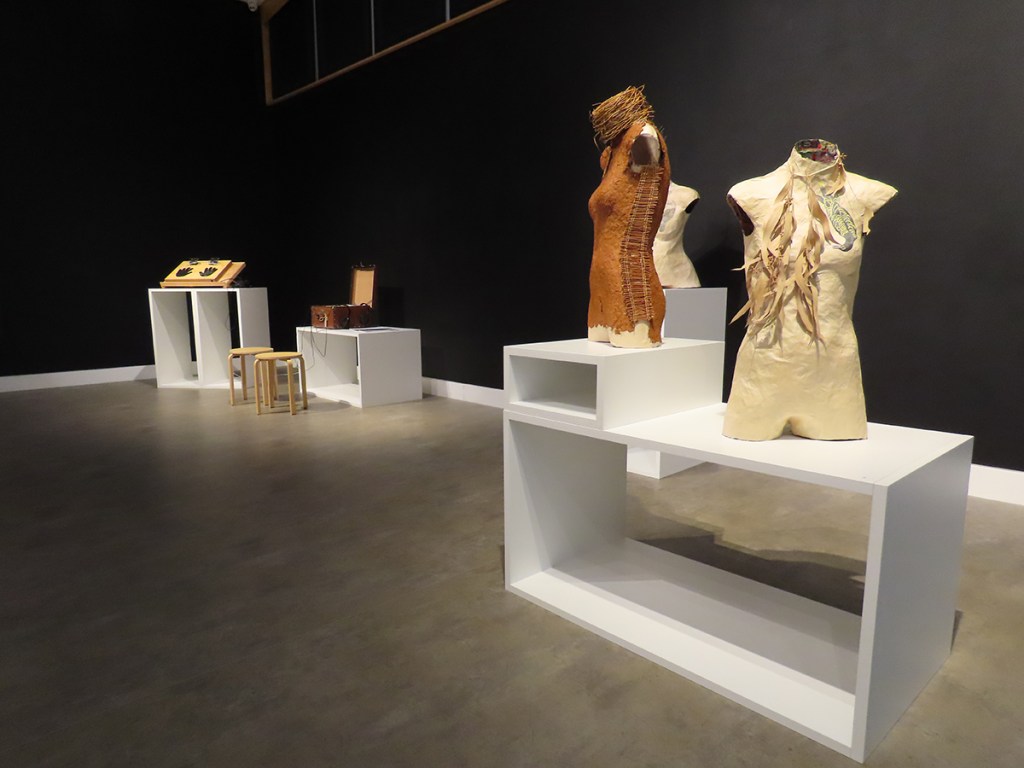

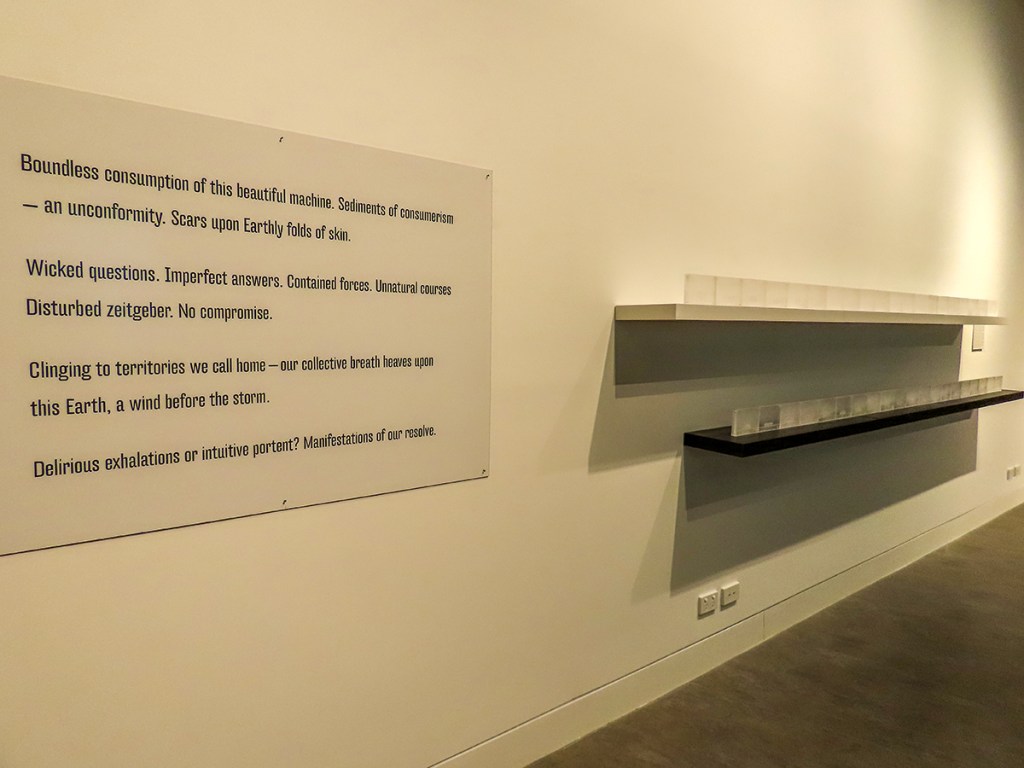
Slideshow: Installation images of the works in the Basil Sellers Exhibition Centre, Moruya on the South Coast of NSW. The exhibition runs until 23 November 2024 (images: Kim V. Goldsmith)
As a way of understanding, intersectional feminism recognises how different aspects of our social and political identity intersect to influence how we think about and experience the world—through race, gender, and/or sexuality or other identifiers. These are the voices that tend to fall between the cracks in the conversations about our future. Even within this collection of works, they’re not fully represented.
Regional is defined by Australian authorities as all the towns, small cities and areas beyond the major capital cities. For those who understand the regions, they aren’t just shaped by the lack of people and traffic, or the mountains, hills, plains, forests, rivers, lakes and oceans, but a way of thinking and understanding. Each artist in An Entangled Existence draws on a deep understanding of these landscapes infused with ancient First Nations traditions and culture and shaped by colonisation. They are deeply connected with the regional communities they live within—the rich socio-ecological fabric of those places, and the complex and nuanced issues that are so often fertile ground for creatives.
The parent project behind the exhibition is Regional Futures: Artists in a Volatile Landscape. It began in 2022 as an initiative of the Regional Arts Network of New South Wales, funded by Create NSW, with a brief to place artists at the centre of a dialogue examining a future vision for the place where they live and create. This was done via self-directed, creative development residencies, culminating in an exhibition and symposium at Casula Powerhouse Arts Centre in Western Sydney in 2023.
The artists commissioned for the Regional Futures project live and work alongside neighbours, friends and businesses at different stages of considering what the future will look like. Creative Producer of the 2022-23 Regional Futures project, Narelle Vogel says this gives these creative practitioners a unique opportunity to use their artform to pose more questions, reveal hard truths, and perhaps suggest solutions.
Their art becomes a safe space for challenging conversations. And as many of us feel a sense of urgency, these artists are being proactive, showing that now is the time to work together towards a more positive future.
Of the 27 artists involved in the original Regional Futures project, seven have come together for An Entangled Existence. They are Anna Glynn (Jaspers Brush), Laura Baker (Blayney), Tracy Luff (Goulburn), Jane Richens (Dungog), Joanne Stead (Tamworth), Tania Hartigan (Wallabadah), and Kim V. Goldsmith (Dubbo).
An Entangled Existence is a selection of the works developed during the original project, and since then, that continue the conversations started in 2022-23. They’re designed to not only question our ideas and values but inspire hopeful actions. Suggestions about the way forward are often revealed in the artworks, like Anna Glynn’s richly coloured video projection work, DWELLING. It speaks of what home is for us as a community, for the environment and the creatures we share these spaces with.
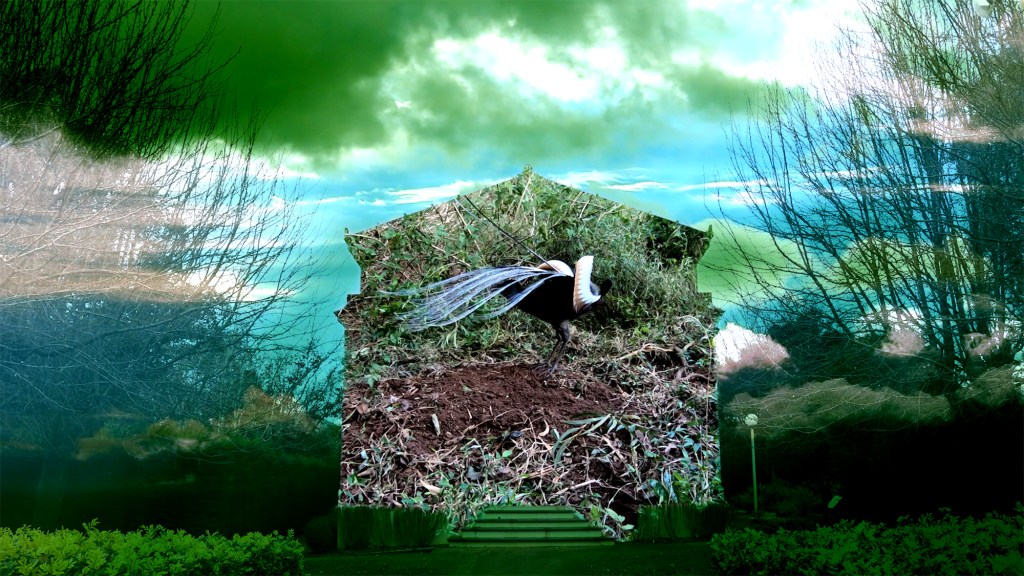
Based in the Shoalhaven, multi-disciplinary artist Glynn says the character of the regions is constantly changing and being reshaped to reflect new populations and expectations.
Small country towns become bustling tourist hotspots inundated with visitors. Perceptions of our regions are shaped by economics. Pressure on the environment increases. The global phenomenon of over-tourism is becoming apparent, and we all participate in this in our own ways.
Is there a happy medium that embraces all of the wants of humans living within an ancient landscape? What does a successful regional location look like?
Glynn believes creative thinking and expression have a unique ability to highlight and direct consideration towards the bigger questions of regional life.
There may also be opportunities for regional artists to profit or prophet in the changing nature of the regions. Our creative practices may draw on and mirror our regional environment giving us the potential to have a positive impact on regional futures.
Finding ways for these messages to gain traction will be crucial for creatives and their communities.

Laura Baker’s finely crafted hand-cut paper houses and acrylic block installation, Places We Call Home also examines the impact of the built environment on individual and collective experiences of community. Hers is on the Central Tablelands of the state. She centres the emotionally loaded word ‘home’ against a backdrop of housing availability and the affordability crises.
Over the past few years regional areas have seen an influx of new residents ‘escaping’ metropolitan centres. Demand for housing and our streetscapes are changing with new developments, contemporary houses and shiny facilities. Town planners and a miscellany of builders will influence the aesthetic of the regional future, but it is the spirit of the people that must be preserved through this period of growth.

Behind the closed doors of home, Tracy Luff has used her delicately hand-crafted cardboard sculptures to progress the conversation about Domestic Family Violence (DFV) in regional communities—for some, a place of no escape. Goulburn-based Luff’s Marionette and Pillows on the Wall tap into the notion of home not being a safe place, particularly during times of great stress.
My work plays an integral role in breaking the silence, fostering open discussions, and challenging the stigma surrounding DFV.
Building strong networks among women and community leaders is essential to creating support systems and sharing resources. Education, especially for the younger generation, is vital to recognising early signs of abuse and promoting healthy relationships.
Advocating for improved access to services in rural areas, including counselling and legal support, is critical. By empowering women to speak out and support each other, we can ensure our regions move beyond awareness to actively eradicate DFV, fostering safety and equality for all.
The works in An Entangled Existence move fluidly between domestic perspectives to regional and global views, asking audiences to acknowledge we are all part of complex, connected systems, where disruptions, good or bad, have a ripple effect.
The heroes of the Upper Hunter captured on video in Jane Richens’ Performative Portraits—Change Makers for a Low Carbon Future are those in the community taking individual actions towards a more sustainable future. Some actions are rhythmic and upbeat, others slow, meditative and ponderous. These people are changemakers in their communities, like stones dropped in a pond—each creating a ripple effect.

Richens sees the arts as a powerful mechanism to rethink and reimagine stories from regional locations using unexpected mediums.
Watch, listen, learn, research, consider, rethink, reflect or retell stories, create new stories. This approach or stream of actions is relevant to any location or environment. It is the care and concern we give to reinventing in response to understanding where we are. That understanding is for me never a ‘one-story-tells-all’. Rather, it is the effort of engaging, experiencing and translating that is a worthwhile, creative and at times playful endeavour.
My practice embraces creating community engagement activities to learn, question, understand and present environmental issues such as biodiversity loss, ecosystem awareness, as well as ideas around sustainability.
While change is a constant in our lives, it is not always easy. Joanne Stead had conversations with local communities around her home base of Tamworth before creating works that reflect ideas of our unacknowledged vulnerability and fragility as humans.
A future that returns to a level of sustainability or regenerative possibilities is necessarily going to involve sacrifice, not the least of which might be the accumulation of things that is so rampant as part of a capitalist, consumerist society.
We will not be able to continue in the manner to which we have become accustomed. In moving to a new mind frame, people’s perspectives will be uncomfortable.
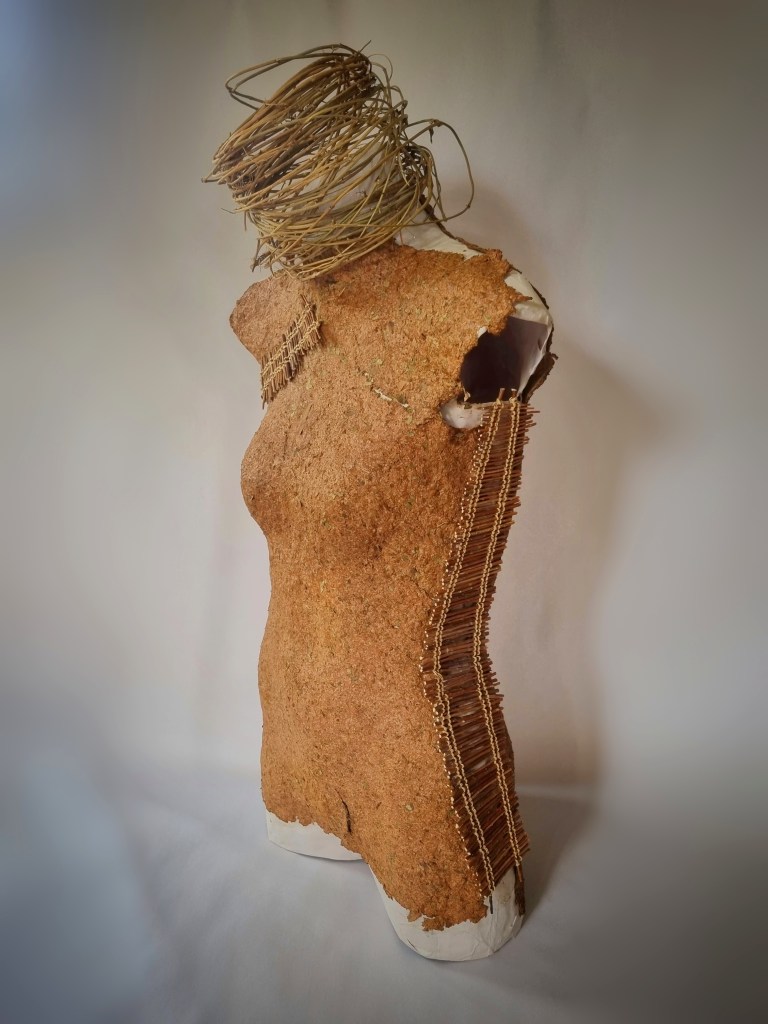
Stead’s sculptural Embodiment series, representative of women’s forms, reimagines our place within the ecosystem, emphasising we are not separate or superior to it but an integral part. Each artwork underscores the need to adopt sustainable practices and live in harmony with Earth’s rhythms.
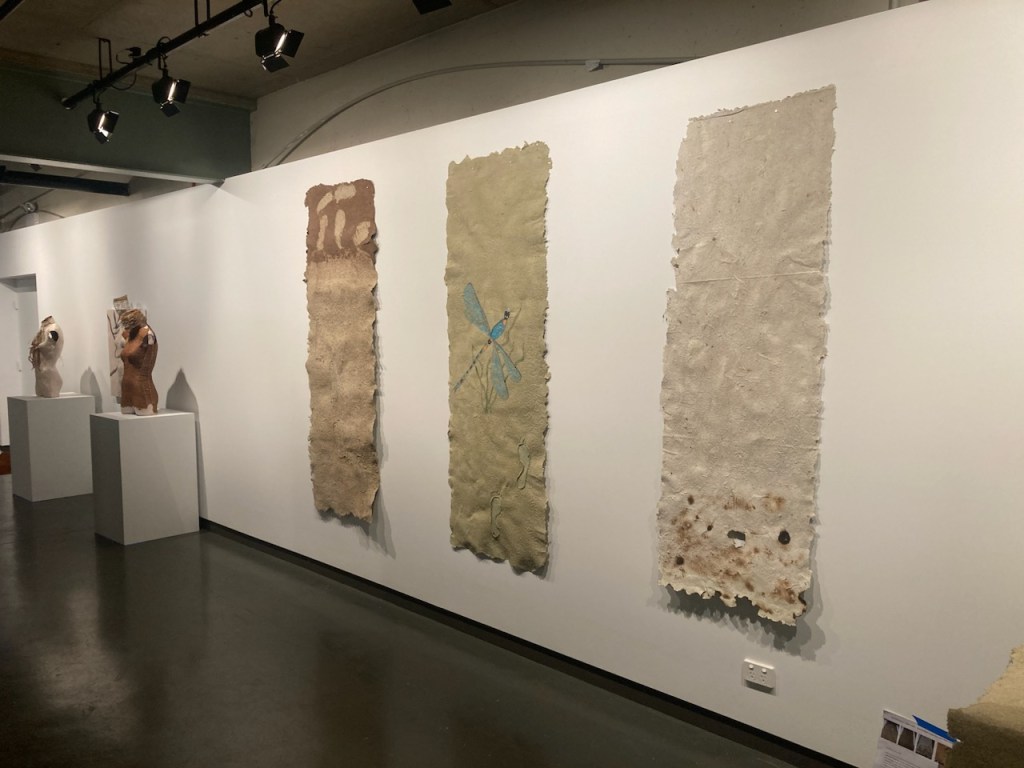
During the creative development stage of the Regional Futures project, Stead worked alongside Wallabadah-based Gamilaraay Yinaar artist Tania Hartigan to create works looking at what sustainability might mean. In talking about the processes behind her handmade paper work, Step Lightly, Hartigan says using environmentally friendly materials and studio practices are central to her living and working sustainably.
I hear the words of Elders sing through my journey, ‘Take only what we need’. These words are important for all of us to ponder in our lives as members of a consumer-based world.
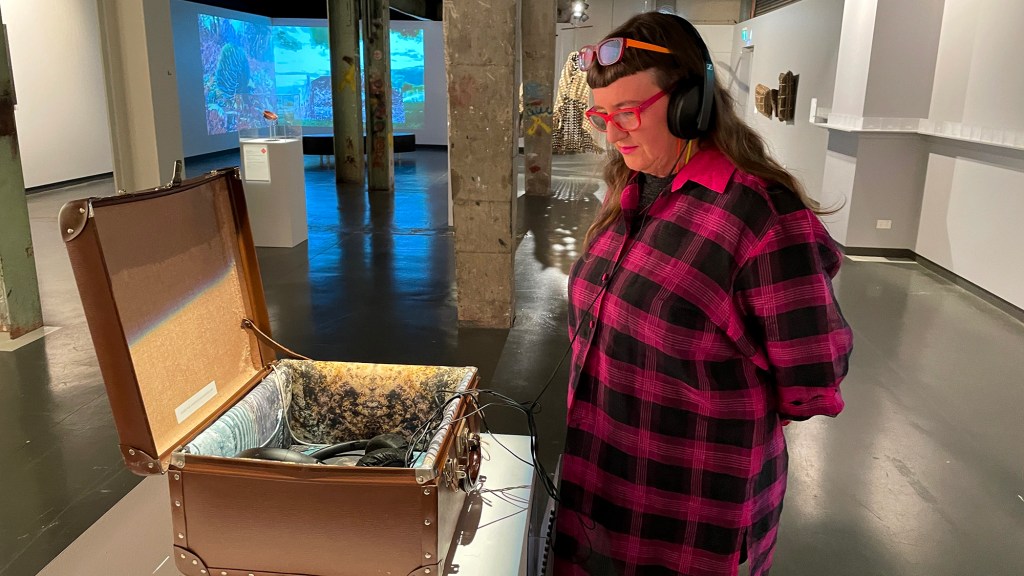
Working across the Western Plains and the Mid North Coast of New South Wales during her residency for Regional Futures, Kim V. Goldsmith’s gathered field recordings of more-than-human voices—bats, birds, fish and earthworms, and first-person audio stories, developing a body of work titled Vaticinor (The Augur). Goldsmith seeks to imagine what a world fuelled by zero-carbon renewables might sound like— where the opportunities lie, and how new ways of thinking, knowing and understanding might achieve a more entangled and abundant future for humans and more-than-humans.
If we listen to each other and the natural world more attentively and deeply, we’ll not only start to understand how connected we are, but that the future we want relies heavily on these connections and the need for more diversity.
It’s critical we include more voices in these discussions about the challenges facing us. It’s a privilege to even be able to have these conversations, but we need to acknowledge that our behaviours, values and viewpoints often exclude some from participating.
The intersectional feminist lens applied to the works assembled for this iteration of Regional Futures highlights the paradoxes of some of the issues facing regional communities. Each artist’s intimate relationship with their home territories offers advantages and disadvantages, as entanglement often does. However, Narelle Vogel sees each one as an active connector and conversationalist, amplifying the voices of their respective communities.
They know how to engage through their art, exploring topics that in many other settings are seen as taboo, too difficult, too political.
Many say that solutions will only be found through creative thinking, through challenging the norms and finding new paths. Artists are well placed to lead this process, using their creativity to bring together disparate thoughts, offering their work as another entry point into this collective conversation.
***
Regional Futures: An Entangled Existence is at the Basil Sellers Exhibition Centre, Moruya NSW, 26 October – 23 November 2024.
***
The following reflection was requested by ClimateCulture’s editor, Mark Goldthorpe.
Creative conversations – listening to unheard voices
In the eighteen months since I wrote a post for ClimateCultures about my work as a commissioned Regional Futures project artist, looking at the impact fast-tracked renewable energy developments were having on regional communities of inland New South Wales (NSW), conversations about our future remain caught up in the ‘climate wars’. There’s been little change in the position of those in power on the direction of a renewable energy-driven future1, with a commitment (if not enough action) to achieve net zero by 20502. We’re far from reaching that target3 and renewables won’t be enough to get us there.
Behind the resistance to wind and solar developments in some communities are conservative politicians calling for the lights to be kept on by extending the life of coal-fired power stations and developing more gas fields, while they fiddle the figures on unviable nuclear options4 in time for next year’s Federal Government election. All this energy infrastructure is in rural and regional Australia.

In my May 2023 post, I wrote of the need to listen to unheard voices in our consideration of the future. My work as a storyteller and sound artist exploring social and environmental ecologies has continued to seek ways to amplify the unheard—human and more-than-human, listening attentively and asking questions about what we need to do to ensure not just a sustainable future, but a more connected and biodiverse one. This is now playing out in a new self-directed residency project called SOIL+AiR creative future landscapes5, focusing on a farm where things are already being done and thought about very differently, despite being in the midst of a conventional broadacre cropping area.
During the recent local government elections in my home region, in the Central West Orana Renewable Energy Zone (REZ), a NSW political party called the Shooters, Fishers and Farmers6 surprised many by securing enough votes to put two candidates on council. The party are very conservative and anti-renewables. This is significant in light of local governments in NSW pushing for a greater role in renewable energy development planning7.
As the climate becomes increasingly unstable, there’s a growing sense of marginalisation and disconnection within less populated rural communities—a case of too much change coming too quickly, and a lack of trust in our political leadership. Australian not-for-profit climate communications organisation, the Climate Council reports a clear rural-urban divide when it comes to the impact of extreme weather events. It’s also clear that thoughts on how we reduce the carbon load on our environment are also divisive8. The impact in question isn’t just extreme weather events. Large-scale renewables bring with them changing land use and aesthetics, environmental impacts from clearing, and the shock of a workforce suddenly arriving in a community already short of housing, health services and public amenities. It’s also cultural change. Governments and the multinational developers are now keen to smooth things over by injecting tens of millions of dollars into the REZ communities for projects and infrastructure.
For me, the Regional Futures project and the work that has evolved from it, such as the Entangled Existence exhibition, has been an opportunity to take more personal action by initiating rarely had conversations about what it means to be a good ancestor9—looking ahead 30, 50,100 years. Significant investment in adaptations for surviving a more hostile climate, driven by political will and systemic change, along with new technologies, will be critical to securing our future. But as individuals within the communities bearing the brunt of change, we can’t afford to wait any longer. We are running out of time. We must step up, making a considered effort to better connect with each other and the more-than-human world, attentively listening, respectfully sharing our stories, and thinking deeply about what actions we can implement collectively, big and small, that will create a meaningful legacy for those who don’t have agency—our descendants. In the recently published book, Living Hot: Surviving and Thriving on a Heating Planet10, Clive Hamilton and George Wilkenfield note “we have the opportunity to make a nation in which the next generations can survive and thrive on a different kind of Earth.”
Providing the creative framework for these conversations is something I can do, encouraging others to walk and talk with me. The Regional Futures: An Entangled Existence group exhibition at Moruya is an opportunity to take the conversation to another community. The South Coast of NSW is dealing with its own complex and nuanced issues in the face of rapid change. As artists, we can have these important conversations during the exhibition, setting the scene for a more abundant, entangled and diverse future, one conversation at a time.
Find more
May 2023 ClimateCultures post Regional Futures: Giving Voice to Human and More-Than-Human
References
[1] New South Wales Government Energy Co: Renewable Energy Zones
[2] Climate Change Authority: Australia’s 2035 Emissions Reduction Targets
[3] Climate Analytics: Sleight of hand: Australia’s Net Zero target is being lost in accounting tricks, offsets and more gas
[4] Liberal Party: Australia’s Energy Future
[5] EcoPULSE.art: SOIL+AIR
[6] Shooters, Fishers and Farmers: Our party
[7] The Guardian: ‘No one understands local issues better’: rural councils call for greater role in renewable energy transition
[8] The Climate Council of Australia: Climate Trauma: The growing toll of climate change on the mental health of Australians
[9] EcoPULSE.art: SPACE Walk
[10] Living Hot: Project and book
 kvgoldsmithart.com