

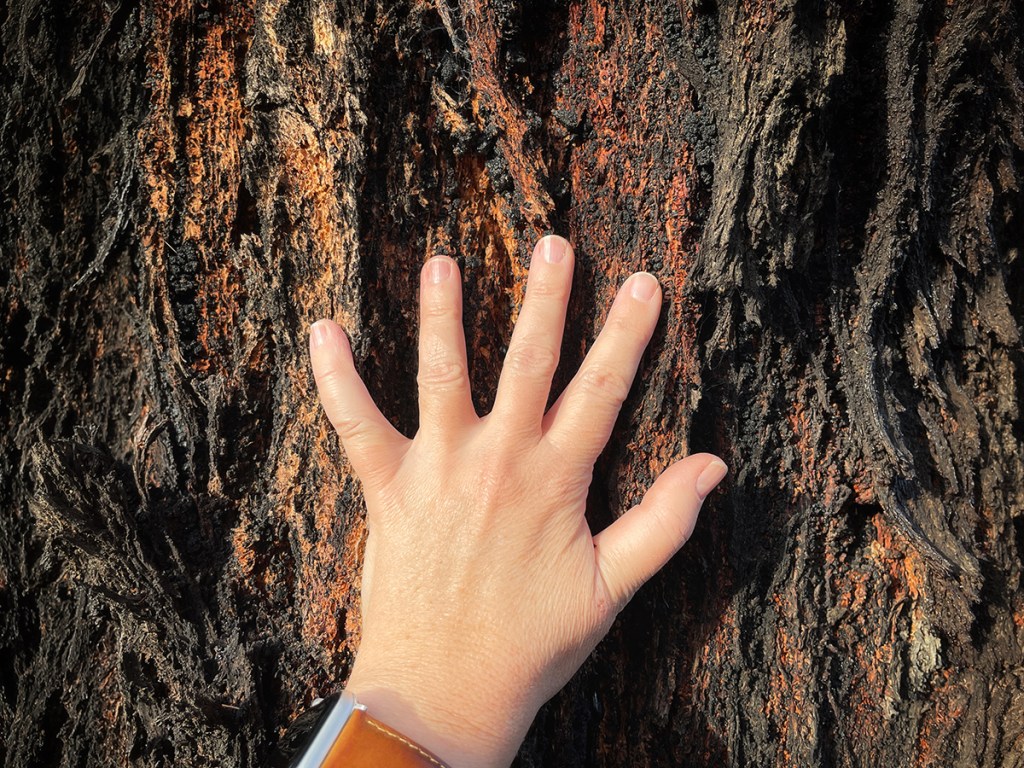
A couple of years ago I sat on a panel at the Artists in Volatile Landscapes Regional Futures symposium at Casula Powerhouse Arts Centre in Sydney to talk about how we might listen better. To underline the urgent need to listen better, I was particularly keen to get across the idea that listening to the environment was a political act, albeit shaped by positionality and relationality.
When I was doing my research before for the event, most of the papers and articles I encountered were about the social and political practice of listening to marginalised voices to disrupt power and privilege (Bassel, 2017). I was looking for something that supported the idea of listening to and field recording the more-than-human world (also marginalised) as a way of giving a voice to species and environments we make decisions about but never stop to really listen to, and as a way for people to (re)connect and engage with more-than-human worlds.
The intent of listening in the field (and beyond)
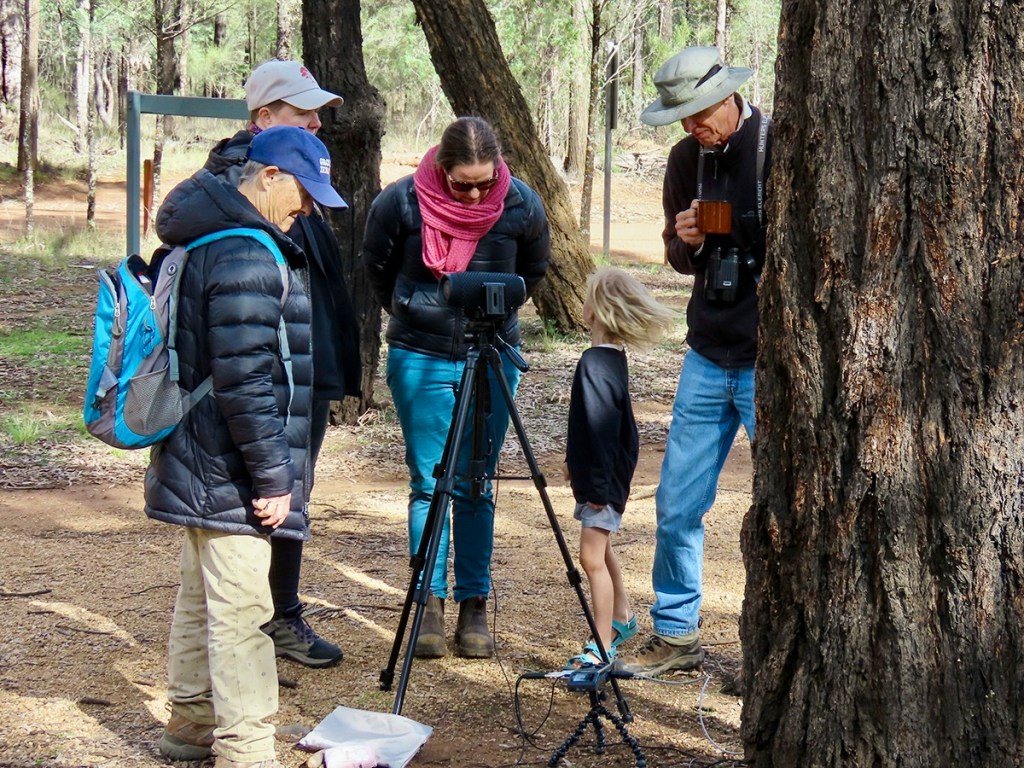
Over the past 17 years, listening has been central to my practice as a field recording sound artist. It’s a discipline. It’s also a way of sharing this special world of sound with others through collective, outdoor listening events such as soundwalks and listening labs, and my more recent offering—5 minutes of silence.
Last month, the ethics of listening to and recording more-than-human worlds was raised with me regarding my new international web project, arboreus.earth—an index of sonic tree portraits submitted by field recordists from around the world. In response to a callout for submissions through the World Forum for Acoustic Ecology Discussion Group, Canadian sound artist, Claude Shryer responded with encouragement as well as some concerns: One of concerns I have is the ethics of intervention. Do these fine trees even want to be recorded and probed by us? How can we know?
A thread of emails from various parties in the discussion group put forward ideas such as notions of intention and motivation being anthropocentric, our symbiotic interdependence with trees (or not), the ethical and relational aspects of these bioacoustic projects, and the how we (re)connect with non-human worlds.
This prompted me to include information on the aboreus.earth website for potential contributors and visiting listeners.
We hope you love this site for what it aims to do—that is using the craft of field recording, art, science, and passion to inspire us all to make deeper connections with the trees around us, thinking of them as kin who connect our past and our future. As kin, we should seek permission to listen to trees and the landscapes they are part of. Whether it is a practice steeped in the ancient knowledge of First Nations people, or a personal evolution of spiritual connection and learned understanding of our entanglement with more-than-human species, those of us working in this space listen and record with the intention of sharing our love of the natural world and belief in a future of less otherness.
The positionality of listening in the field
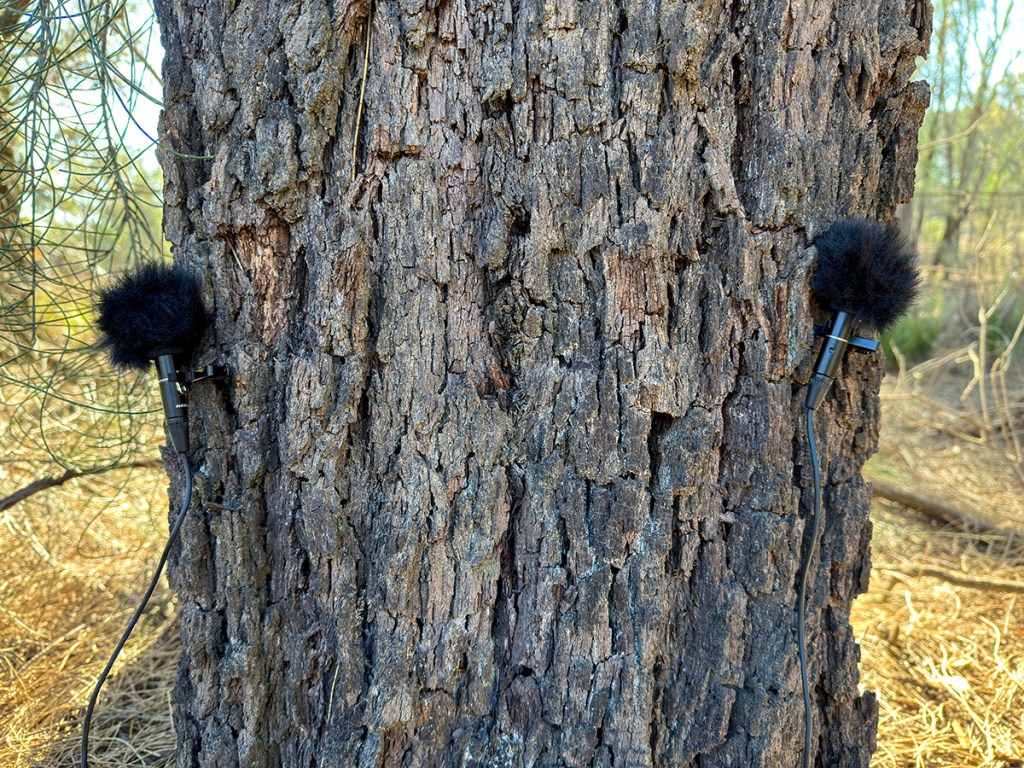
Allocasuarina luehmannii (Buloke) sonic portrait on arboreus.earth
The motivation for an intervention—in this case, the use of audio recording technology to not only listen to the intimate sounds of trees within the landscapes they art part of, but to capture and share those sounds with others, is shaped by positionality. That is personal values, views, and our place in time and space influencing how we engage with and understand the world. I won’t profile myself here, but I’m very aware of my privileged non-Indigenous position in this ancient land.
When questions are posed about a tree’s agency, it’s referencing the dynamics of power and privilege that come with some personal positions—and let’s be honest, field recording is a privileged practice, requiring access and means. It can easily be another colonising act of extractive exploitation.
Dylan Robinson’s awarded book Hungry Listening: Resonant Theory for Indigenous Sound Studies (2020) on the Indigenous listening experience and the way settler colonialism has impacted Indigenous sonic spaces, is a critical evaluation of how listening practices emerge from increasing awareness of our listening positionality. It underscores Western dominance of sound studies and how that has shaped the field.
Put these questions to anyone outside academic or acoustic ecology circles and you get an incredulous reaction. Over the past three years, I’ve spent considerable time listening and recording the thrum of life in the soils of farmland, wetlands and forests. I do wonder if this question of ethical listening would have been raised if I was calling for soil recording submissions. Is there a hierarchy when it comes to the agency of more-than-human species?
What about listening to rivers? The granting of rights and legal personhood to rivers raises so many questions about the ethics of listening and recording these waters. (Rights of Rivers International)
The practice of listening in the field
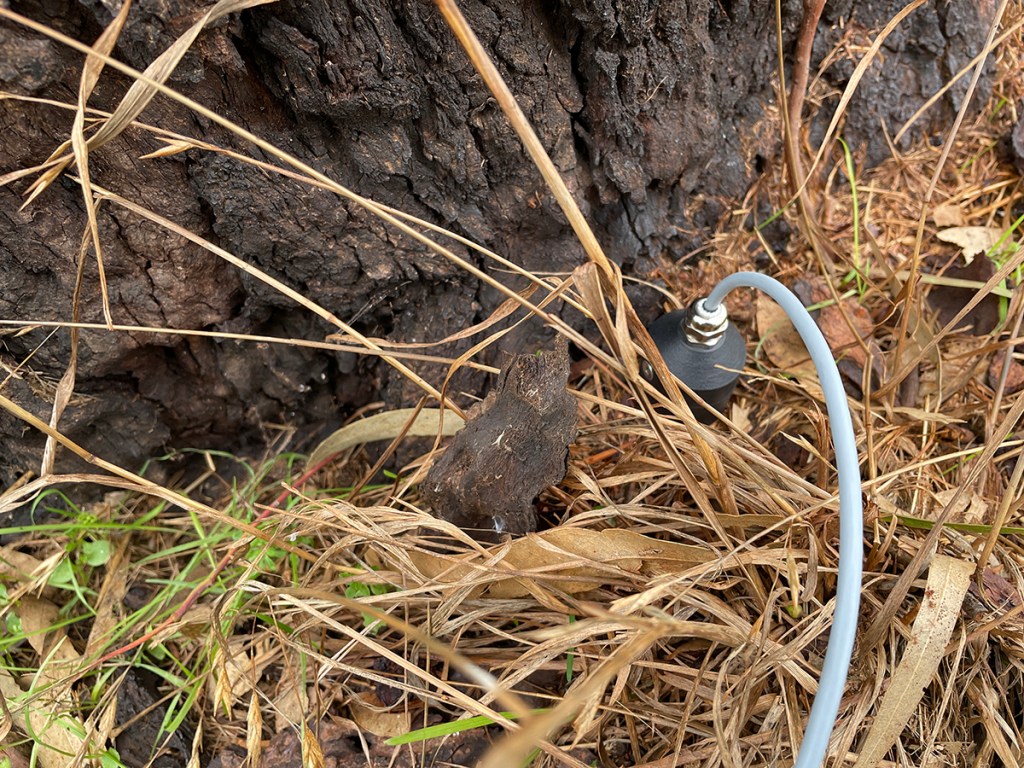
Questions of ethical listening and interventions in the capture of sound should be explored by emerging and established practitioners. Highly regarded UK sound artist and maker of microphones, Jez riley French documents his concerns about field recording practice on his website. His popular adapted c-series contact microphones now come with a probe option, the ‘ecoutic’ mic, making sub-surface listening even more accessible. However, as he says: It is important to consider ethical approaches to trees and plants as using a spike can damage some species and should be used with either permission or knowledge of the species. I would argue it should also not be done without having a practice that does involve a healthy amount of individual insight.
I’m thinking of all of this as I listen to and capture the sounds of non-human species across the territories of my home region, preparing for the production of new work in the spring with the local Wongaibon community of Trangie in Central West NSW. We’re planning to record sounds of the environment at a site chosen by members of the community, to mix with the rhythms of cultural dance—an ancient ritual of making contact with the earth and Country. I’m being directed by the community on this, and I’m very open to experiencing it through them. However, I have to be attentive and listen with my whole body.
One warm winter’s day a few years ago, I encountered an older Wiradjuri man who came across me listening to the rumbles in the swollen base of an ancient River Red Gum (Eucalpytus camaldulensis). He quietly withdrew until I was finished, building a small fire nearby. When I’d finished, I joined him by the smoky fire and explained what I’d been doing. He nodded. He understood without any detailed explanations. We spent several minutes together, sharing our listening experiences. He told me about advice he offers those going out on Country for the first time—listen to your body. If something feels wrong, you need to leave. It’s not your day to be there.
When I’m talking about pre-production field recording practices with participants in my Power of Sound course, I raise the idea of asking permission before recording. Regardless of how you do this, it has a practical application as much as an ethical or spiritual one. It slows your breathing and heart rate, allowing you to think more clearly and connect more deeply with the place you hope to capture. Even then, there are some days when you will leave without anything—often because you ignored something or didn’t listen deeply or attentively enough before engaging the technology.
I’m interested to hear from other field recording practitioners on these questions. Are they things you’ve considered? What do you bring to the act of listening beyond your craft? Does this shape the what, why, and how you record? Comment on the post for this blog on my socials—Facebook, Instagram, Bluesky, or LinkedIn.
If you’re interested in submitting a soundscape to arboreus.earth, find out more.
 kvgoldsmithart.com